Death Cleanup
Fluids, odor and impacted belongings are addressed when a home is cleaned after a death.
See death cleanupGet blood, body fluids and affected materials removed after a death found quickly, once the room or property has been released to you. Cleaning stays focused on the affected area, with careful attention to personal belongings.
A focused service for a person who died while someone was present, or who was found soon after, is called attended death cleanup. Blood, body fluids and contaminated materials are taken away before impacted surfaces are cleaned and disinfected for the room to be usable again.
A death found quickly is different from an unattended death that remains undiscovered for days. There may be little or no decomposition, but a bed, floor, chair, bathroom or nearby belongings can still be affected. The exact scope depends on what reached each surface, not simply on the fact that a death occurred.
Paramedics, police, the medical examiner or funeral home personnel may take part in the emergency response. Each completes duties related to caring for the person, yet property cleaning is not necessarily among them. Once formal release of the space occurs, a death cleanup team can locate contamination and shield nearby areas. The team can also sort what is cleanable from what requires removal.
This service is not the same as clearing an entire estate. Odor and contamination in the immediate area are addressed by biohazard cleanup services. Later, the estate cleanout addresses clothing, furnishings and household belongings. During a difficult time, doing the jobs separately can prevent the loss of belongings you value.
You should receive an explanation before cleanup starts that covers impacted rooms and materials, reasons for cleaning or removing each item and possible later restoration.
You can use photographs, a specific work scope and waste documentation to describe the cleanup to a landlord, insurer, estate representative or restoration contractor. The documentation also identifies cleaned areas, removed materials and items left behind.
Unmarked vehicles can reduce attention at the property. Entry may be organized by you or through your trusted representative, family member or estate contact.
Belongings beyond the affected zone should remain safe. You should be consulted before any permanent decision is made about belongings close to the cleanup zone, since keepsakes can hold great meaning for your loved ones and you.
Attended death cleaning may be needed in shared settings, apartments or homes when a recently found death leaves a biohazard, including blood or body fluids. No two situations have an identical scope. Common cleanup needs are:
Bodily fluids can enter grout, carpet edges, mattress seams or spaces near baseboards even when the event was recent. Inspection is necessary before treating visible-surface wiping as adequate for those areas.
When blood or body fluids enter absorbent materials, routine housekeeping may not be enough for a resident's bathroom or room. A site representative should confirm the space is released before cleaning starts.
Quick discovery can mean there is neither an obvious odor nor visible decomposition. If fluid entered cloth, raw wood, layers of flooring or another porous material, professional cleanup may still be suitable.
Although hospice personnel assist the person and relatives, responsibility for mattress, furniture or floor cleanup may stay with the property's occupant. Remediation can remain limited to the affected area after a death found quickly.
Protecting others from exposure comes first. Preserve the space and do not enter until an appropriate authority has released it. Use the following steps before cleanup:
Call (888) 351-0904No credible published price range exists for attended death cleanup specifically. Public guides to biohazard cleanup are useful only as context, with common jobs running from $1,800 up to $4,500; $3,000 through $5,000; and $2,500 through $8,000 per job. None of these figures is a quote for attended death cleaning. Actual scope varies with affected area size, the surfaces involved, needed removal and waste disposal. Each card below identifies its source.
Published national cost guides are the source for these ranges, rather than an inspection of your property. The price for your property is set after the on-site assessment, and you hear it before work starts.
Ask about cost: (888) 351-0904Insurance coverage varies with the policy, cause of loss and documentation the company requests. Your first step toward assistance is to ask the insurer what is covered. A home, commercial, renters or landlord policy should not be assumed to pay.
Cost responsibility depends on the affected area, local rules, the lease and the policy. The estate representative, tenant and owner need to establish responsibility directly, not presume who must pay.
Report the event to the insurer and ask specifically about biohazard remediation, contaminated contents and necessary material removal. Record the claim number and the adjuster's document requests.
Homeowners or renters insurance, the estate or the property owner usually pays for this kind of cleanup. The Ohio crime victim compensation program helps only when a crime caused the loss. Because each program sets its own eligibility and covered costs, check current requirements with the program itself before deciding about finances.
Photos, an itemized scope, removal records and waste paperwork may be requested by insurance companies. If you need insurance assistance, save every communication and ask what paperwork your specific policy requires.
The attended death cleanup process keeps the work limited, orderly and respectful. This remediation process follows the path of contamination from the immediate area to any material beneath it, so every step has a clear purpose throughout the entire process.
The technician verifies release of the space, gathers known details about the event and inspects both affected areas and surrounding surfaces. Existing conditions can be documented in pictures to clarify the required work.
The affected area is kept apart from clean rooms. For the exposure present, cleanup technicians choose protective gear, with respiratory safeguards, gloves, suitable clothing and eye protection.
Unaffected keepsakes are moved away from the work zone. Items near the affected area are evaluated one at a time so sentimental property is not discarded without discussion.
When absorbed fluid prevents complete disinfection, removal may be necessary for bedding, upholstery, carpet padding or unfinished construction material. Removal stops at clean, unaffected material.
Visible material is cleared before disinfecting. Hard surfaces are treated with an EPA-registered disinfectant and kept wet for the full contact time stated on the product label.
Areas checked include furniture connections, baseboards, carpet edges, seams and layers beneath a mark you can see. This inspection establishes if surface treatment is sufficient or targeted removal is required.
Contaminated waste is packaged securely for transportation as required by the relevant rules. Records kept for a property representative or insurance company may include photos, the work scope and waste documents.
Inspectors examine the work area once disinfection and the cleaning process are complete. The property contact gets a summary of the entire process that explains every step, identifies cleaning and removal, and notes which repair or restoration services may be necessary.
Phone any hour. A specialist in attended death cleanup takes your call, explains each step and agrees on a start time with you.
Serious health hazards and infectious material may remain after a quickly discovered death, including in areas beyond the reach of normal household cleaning. Risk varies according to the type of fluid, which surfaces it touched and any spread outside the room.
Blood may carry HIV along with hepatitis B and hepatitis C. Hepatitis B can live on a surface for at least seven days, the CDC says. Do not consider dried material safe merely because the area no longer appears wet.
If bedding, padding or building material cannot be disinfected, it may become hazardous waste that must be packaged and discarded according to applicable medical waste rules. Those materials should be kept apart from ordinary home belongings.
Fluid can follow seams, settle under a bed frame, enter carpet padding or pass between floorboards. A visible stain can be removed while contamination stays below the surface material.
Can you clean it yourself? Without bodily fluid, blood, odor or affected porous material, the area might not require specialized remediation. For a small amount on a sealed, non-porous surface, avoid contact and use an EPA-registered disinfectant exactly as its label directs. When fluid has reached absorbent material or the affected edge cannot be seen, choose a professional evaluation for safety.
Professional cleanup decisions depend on the kind of surface and how far contamination penetrated. Sealed material is often suitable for cleaning. Absorbent material might have to be removed when fluid has entered its interior.
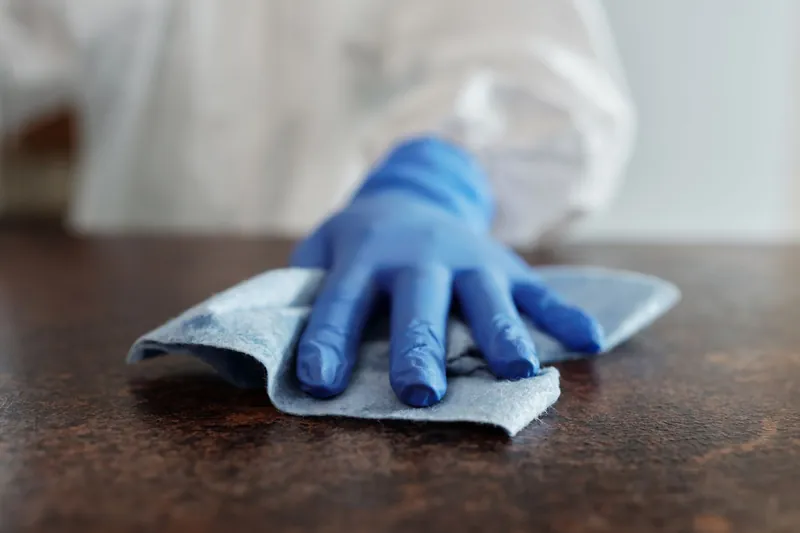
Cleanup time is determined by the amount of affected material and the depth reached by fluid. Work limited to a contained surface is quicker than a scope involving carpet lifting, subfloor inspection, belongings sorting or regulated waste arrangements.
| Scene | Typical time on site |
|---|---|
| Limited hard-surface area | A shorter process if no absorbent material is involved and contamination has defined edges |
| Bed, carpet or furniture affected | Extended work when layers require access, evaluation and removal |
| Several materials or rooms involved | Longest when the scope includes contents, structural material, odor work or repairs |
A death found quickly may produce little or no lasting odor. If odor is present, the first step is to locate and remove contaminated material. Fragrance does not clean a source, and strong deodorizer can make it harder to tell whether affected material remains.
Following removal of the source and cleaning, airborne particles can be captured with HEPA filtration to support air quality. A technician may check HVAC returns, nearby fabric and wall openings when an odor has traveled farther than the immediate area. Any air treatment should reflect what is actually present in the room and must not take the place of removal, cleaning or full disinfectant contact time.
The full attended death cleanup guide covers what is cleaned or removed, odor and air quality work, and the rules that apply in your state.
Read the full attended death cleanup guideLocal housing, population and access details can shape containment, access and cleanup planning.
For an injury during discovery, Riverside Methodist Hospital is the nearest listed hospital at approximately 4.0 miles away.
The surrounding area includes Potter's Creek, Far Northwest Columbus, and Beechview, so cleanup travel may cross several local streets or municipal boundaries.
A cleanup plan for this neighborhood should account for adjacent homes or units when setting odor control and containment boundaries.
During your call, ask whether cleanup is available in surrounding communities and ZIP codes.
Fluids, odor and impacted belongings are addressed when a home is cleaned after a death.
See death cleanup
Cleanup when a death went unnoticed for days, with decomposition and odor control.
See unattended death cleanup
Removal of decomposition fluids from floors, subfloors and furniture.
See decomposition cleanup
Air scrubbers, hydroxyl and ozone treatment support death odor removal at its source.
See death odor removal
Estate cleanout after a death, with sorting of belongings and safe removal.
See estate cleanout after a death
Walls, carpets, furnishings and hard floors receive blood cleanup, with safe disposal afterward.
See blood cleanup
Homes, care environments and businesses receive bodily fluid cleanup and disinfection.
See bodily fluid cleanup
Following accidents, violence or injuries, trauma scene cleanup addresses the affected area.
See trauma scene cleanupAttended death cleanup is biohazard cleaning after a person dies while someone is present or is found soon afterward. The work concentrates on bodily fluids, blood and impacted materials close to the event. It usually does not involve the widespread decomposition conditions associated with a death that remained undiscovered for days.
An attended death is witnessed or found quickly, so contamination is often more limited and decomposition may not be present. More air, flooring and contents may be affected when an unattended death is not discovered for a longer period. Each situation needs an assessment of the real materials and fluids involved rather than a decision based only on the label.
Relatives need suitable training and protection before touching blood or body fluids, and no one should enter the room prior to its release. Household cleaning can spread contamination into carpet, laundry or clean rooms. When the affected area has unclear edges or reaches porous surfaces, a professional biohazard assessment may reduce exposure and help avoid incomplete cleanup.
No credible public guide gives a range specifically for attended death cleanup. General biohazard guides publish broad ranges, but those figures are context, not a quote for your room. Cost varies with the impacted surfaces, how deeply fluid soaked in, material removal, waste rules and any need for odor treatment.
Belongings outside the affected area can usually be protected and left in place. Each nearby belonging requires separate assessment. Non-porous sealed possessions may be cleaned even when absorbent materials cannot be. Ask for keepsakes, documents, jewelry and photos to be set aside for discussion before anything is removed.
Specialized cleaning is unnecessary after some deaths. If there is no blood, body fluid, odor or affected porous material, a biohazard service may not be necessary. If fluid may have reached bedding, carpet, upholstery, floor gaps or an unseen layer, ask for an assessment before moving or cleaning those materials.
Discreet, respectful attended death cleanup, 24 hours a day, with crews in unmarked vehicles.